
What fascinates you most about dairy cow behaviour?
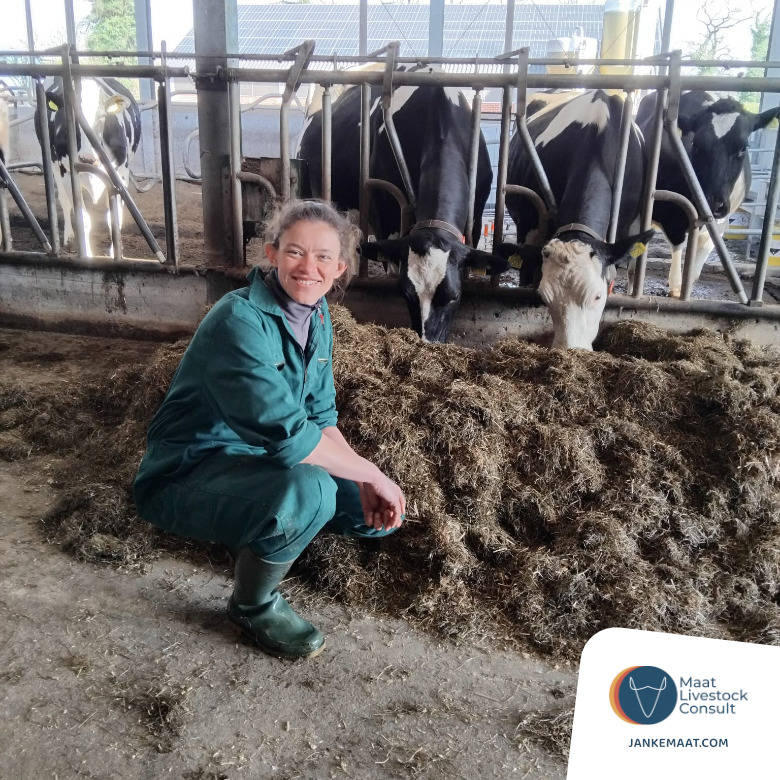
I grew up on a dairy farm and have had a passion for animals from an early age. Cows continue to fascinate me. They are curious, friendly, have a clear social structure, and when you truly observe their behaviour, you learn a great deal about what they need. Closely observing cow behaviour is, in my opinion, the key to continuously improving dairy farming. That is what I am committed to every day.
First see the bigger picture, then zoom in
When you walk into a barn, what do you immediately notice about the cows that others often miss?
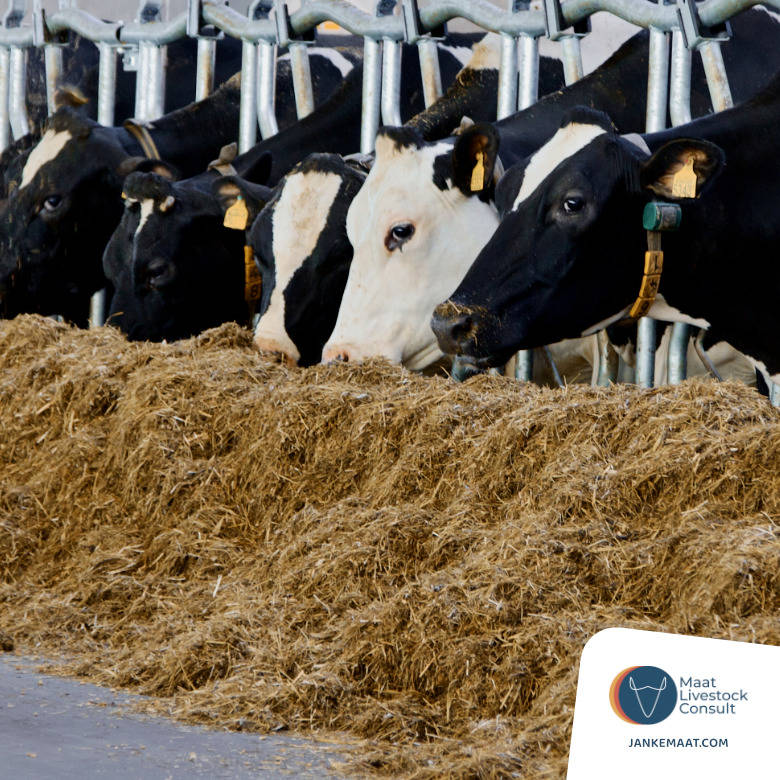
Whenever I visit a barn, I first try to quickly get an overall impression of the herd. A common pitfall is focusing on details too soon. Details are important, but they only make sense when viewed within the bigger picture. My first look is therefore at the entire barn: how many cows are standing, how many are lying down, and how many are ruminating? Are cows waiting somewhere, and if so, what are they waiting for?
After that, I zoom in on a specific group of cows. Do they have a full rumen? What is their body condition like? Do they have wounds or hairless patches? Then we zoom out again: what does this say about the barn and the management, and where is there room for improvement?
That is one of the key lessons I learned from CowSignals®, a concept I apply every day. The most valuable part is doing this together with the dairy farmer, advisor, and veterinarian. Together you see more, and together you learn more. Taking a step back and critically assessing the bigger picture helps everyone move forward.
What appeals to you about working with Royal de Boer?
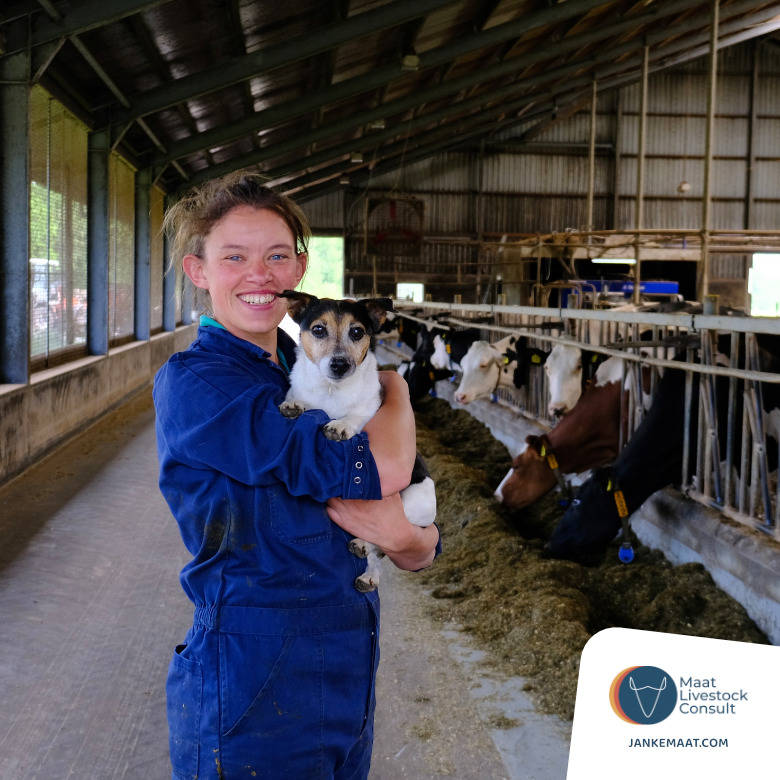
What immediately appealed to me was that I was asked to contribute from the cow’s perspective, not from a product perspective. During our introduction, there was an immediate connection: a driven team continuously striving to improve and offering solutions for dairy farmers who truly put the cow first. That is a mission I fully support.
How do you safeguard your complete independence?
I work with Royal de Boer as an independent veterinary advisor. That independence is essential to me. From a professional point of view, I want to be able to openly say what I observe, even when that is critical. Only then can you credibly work towards solutions that benefit the cow, the dairy farmer, and society.
This independence was also important to Royal de Boer itself in order to maintain credibility. That is why it has been explicitly defined in our agreement. It enables me to remain fully transparent and always prioritise the interests of the cow and the dairy farmer, even when that may conflict with other interests.
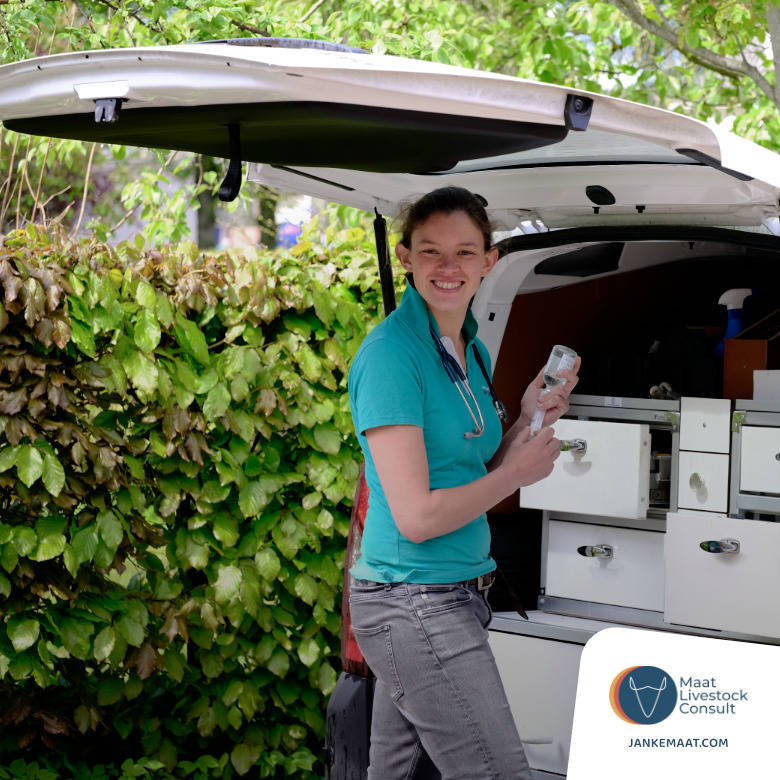
How would you like to apply your knowledge and experience?
There is already a great deal of knowledge and experience among dairy farmers and dealers — in some areas even more than I have myself. But there are always questions, challenges, and new insights emerging in the field, and I hope to contribute with my knowledge and expertise.
I believe it is important to collaborate as equals and make use of each other’s insights. I also enjoy translating scientific knowledge into practical applications for everyday farming.
In practice, our collaboration can take many forms: seminars, farm visits, training sessions — whatever is needed.
When does a cow truly feel at home in a barn?
I do not know whether I can truly say a cow feels “at home.” But you can clearly see whether a cow feels comfortable in her environment: in the way she looks, lies down, and moves.
Cow comfort is an important factor, but so is good herd management. That includes sufficient high-quality feed at the feed fence, a dairy farmer who handles the herd calmly, and cows being treated quickly and properly when problems occur.
A barn design that matches the needs of the cow, combined with the craftsmanship of the dairy farmer, creates an environment where cows truly feel at home.
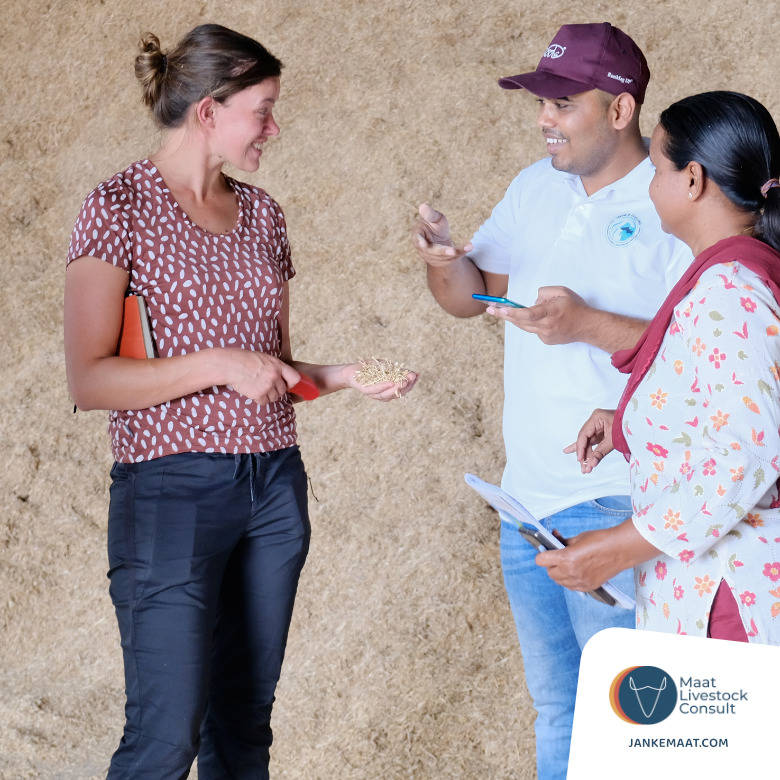
Continuing to learn from one another is the foundation
What do you hope dairy farmers will see or do differently after a training session, presentation, or conversation with you?
Every single day I learn something new, often from the dairy farmers I work with. That mindset, continuing to observe and continuing to learn, is something I hope to pass on. I hope people walk into the barn with a fresh perspective and ask themselves: what can I do differently today to start better tomorrow?
Curious to learn more?
 | Want to discuss cow comfort? By observing both the cow and the barn together, we bring behaviour, barn design, and management into balance. From lying comfort and cow traffic to ventilation and space utilisation: every detail matters when you want to make a difference in health and production. The result is a barn designed from the cow’s perspective. An environment where cows can express natural behaviour and perform at their best. Where Cows Feel At Home. → Contact us by email or phone for more information! |